· Text and images created with AI
Our pilot in the UK with the charity Re-engage
Between 23 February and 9 March 2026, SilverFriend ran a pilot with the UK charity Re-engage — daily phone calls for older adults living alone.
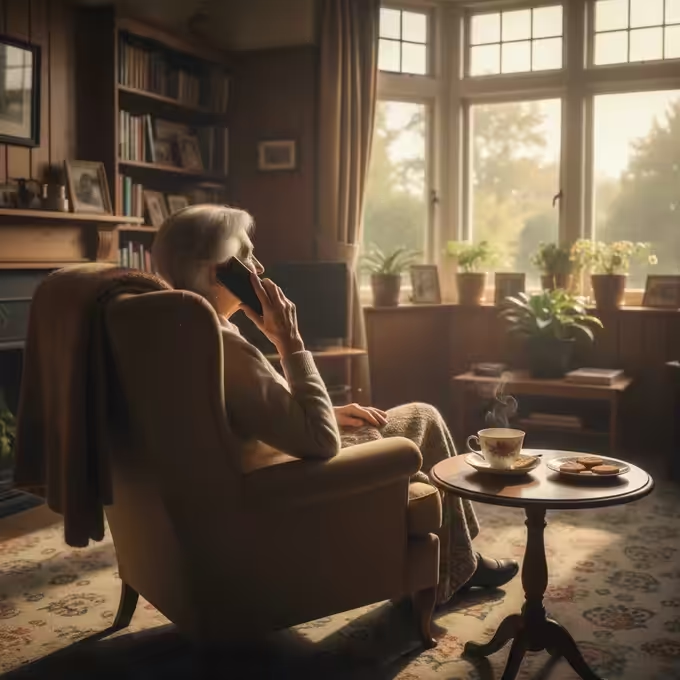 AI-generated
Between 23 February and 9 March 2026, SilverFriend ran a short pilot with the UK charity Re-engage. The aim was simple: place a daily phone call to a small group of older adults living on their own, in English, for fifteen days, and see what we could learn from the calls themselves.
Our thanks to David Heap and Jess Doyle at Re-engage, who set the pilot up and made the introductions.
About Re-engage
Re-engage is a UK charity founded in 1965, working to end social isolation and loneliness in people aged seventy-five and over. Their stated vision is that no one is ever too old to make friends or to enjoy social interaction. The work runs across three main programmes — monthly Tea Parties that bring small groups of older people together for conversation in volunteers’ homes, Call Companions which matches volunteers with isolated older adults for regular telephone befriending, and Activity Groups offering gentle exercise and social connection both in person and online. All services are provided free of charge. In their 2024–2025 year, more than 7,600 volunteers supported over 6,600 older people across the UK. (Source: reengage.org.uk.)
The arrangement
Re-engage offered the pilot to members of theirs aged seventy-five and over, living on their own in the UK. SilverFriend offered a daily phone call for fifteen days, in English, using the same service that German families will arrange for their parents and grandparents. There was no app, no dashboard, no video, and no hardware involved. A phone rang at a time the participant had chosen, and a conversation followed, or did not.
A small group of those invited took us up on it. The five who said yes did so because the offer arrived through a charity they already knew, and because a daily call sounded like something it was reasonable to try.
What we saw across the cohort
Across the fifteen days the cohort produced a little over a hundred minutes of real conversation. The numbers were modest on purpose — this pilot was designed to listen, not to scale — but three patterns came through clearly.
Conversations got longer over time. Where someone took the calls repeatedly, the early exchanges of one to three minutes grew into seven- to twelve-minute conversations by the second week. The first call was rarely the most useful one. By the third or fourth call, participants were leading the conversation rather than answering questions.
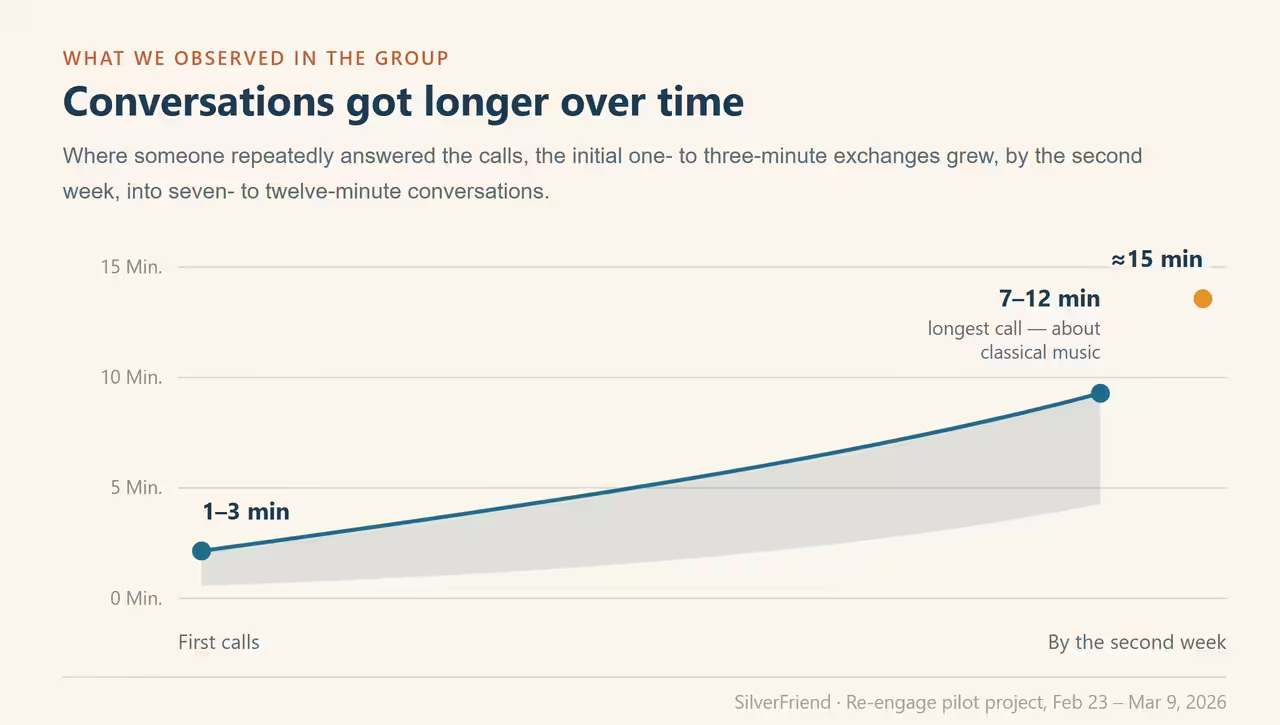
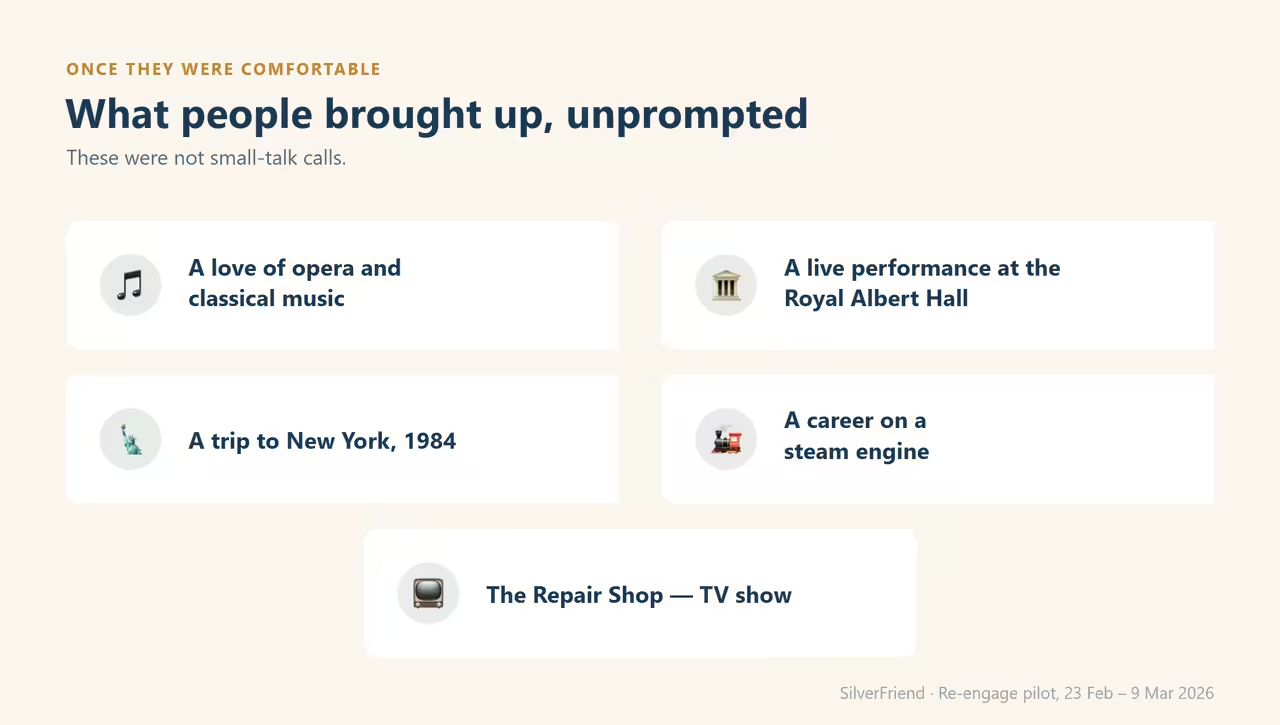
Participants brought up specific, personal things without being prompted. Once they were comfortable, people talked about a live performance at the Royal Albert Hall, a trip to New York in 1984, a career on a steam engine, a love of opera. The longest single conversation of the pilot ran close to fifteen minutes and was a conversation about classical music. These were not small-talk calls.
Difficult moments came up, and the service handled them. Over the fifteen days the calls included a recent bereavement, a question about medication dosage, news of a sister’s dementia, and a birthday during a period of recovery. The job was not to solve any of these. It was to listen, to suggest speaking to a GP or a family member where appropriate, and otherwise to stay on the line. That part of the service worked under real conditions.
No participant is named in this piece, and no direct quotes are used. The point of the pilot was not to produce case studies; it was to find out whether a daily phone call introduced through a trusted charity could become part of someone’s ordinary week.
What the pilot changed in the product
The pilot surfaced specific gaps in the service. Three of them have since been fixed, and each fix is a direct response to something the pilot showed us.
The service is more reliable than it was in February. The pilot was the first time we ran daily English calls at a tempo we could not monitor by hand, and several parts of the infrastructure failed quietly when they should not have. In the weeks after the pilot we rebuilt the components that were silent about their own failures: the call scheduler, the safety circuit, and the health probes that watch the system. The result is that when something goes wrong now, we hear about it in minutes rather than days, and a participant who is owed a call gets one.
Participants can ask to be called back at a better time. The single most consistent pattern in the calls that did not happen was that the timing was wrong. A participant might be in the middle of a programme, or have a visitor, or be in the garden. We added a callback path: the call ends cleanly, the request is captured during the call, and the next call is placed at a time the participant has confirmed works for them. Several conversations in the pilot ended awkwardly because we did not have this. They will not end that way again.
Personalisation now uses what the participant has actually said. Generic questions were getting in the way of the conversations the cohort wanted to have. We rebuilt the part of the service that holds context across calls — not as a one-off lookup at the start of a call, but as a record the conversation can add to and return to over time. The opera enthusiast does not have to explain who Hans Zimmer is twice. The retired police officer does not have to re-introduce The Repair Shop. The dog owner is asked about her dogs by name. By the second week of calls, the conversations were materially different from the first.
What we are taking with us
Three things from the pilot will shape how we run the next one.
A trusted charity introduction changes the first call. When the service arrives through Re-engage rather than as a cold call, the opening minute of the first conversation goes differently.
The service gets better the longer a participant takes part in it. Designing for continuity, rather than for one-off engagement, is where our development effort now goes.
Thank you
To David Heap, Jess Doyle, and everyone at Re-engage who made this pilot possible — thank you. The pilot was small but it has changed the service in ways that will carry well beyond the fifteen days it ran, and we are grateful for the care that went into setting it up. To learn more about Re-engage and their work, visit https://reengage.org.uk/.
If you are part of another charity supporting older adults living on their own and you would consider a similar pilot, we would welcome the conversation.